
Toyota Offroad Showdown: TRD Pro vs. Trailhunter
TRD Pro and Trailhunter sit at the top of Toyota’s off-road world, built to satisfy two different instincts. TRD Pro is the long-running flagship for factory off-road performance. Trailhunter is the new factory-overland concept, aimed at buyers who want integrated expedition hardware and a cohesive “ready to outfit” foundation without starting from a blank slate.
The clearest structural difference is how broad each lineup is. Trailhunter is currently focused on two nameplates—Tacoma and 4Runner—making it a concentrated identity rather than a badge applied everywhere. TRD Pro, by contrast, spans more models, and Toyota has positioned TRD Pro availability across 4Runner, Tacoma, Tundra, and Sequoia, which makes TRD Pro the wider-reaching “halo” family while Trailhunter remains intentionally narrow. (Toyota)
That difference in reach reflects a difference in purpose. TRD Pro is typically the trim that signals Toyota’s most capable off-road tuning for a given platform, with components selected to deliver control, durability, and a distinctive look straight from the factory. It tends to emphasize the “drive it hard” personality: suspension and traction tech that suit fast dirt roads, rough trails, and the kind of off-pavement use that still prioritizes drivability at speed. Trailhunter emphasizes “live out of it,” built around the idea that the platform should arrive with key overlanding upgrades already engineered into the vehicle. (Toyota)
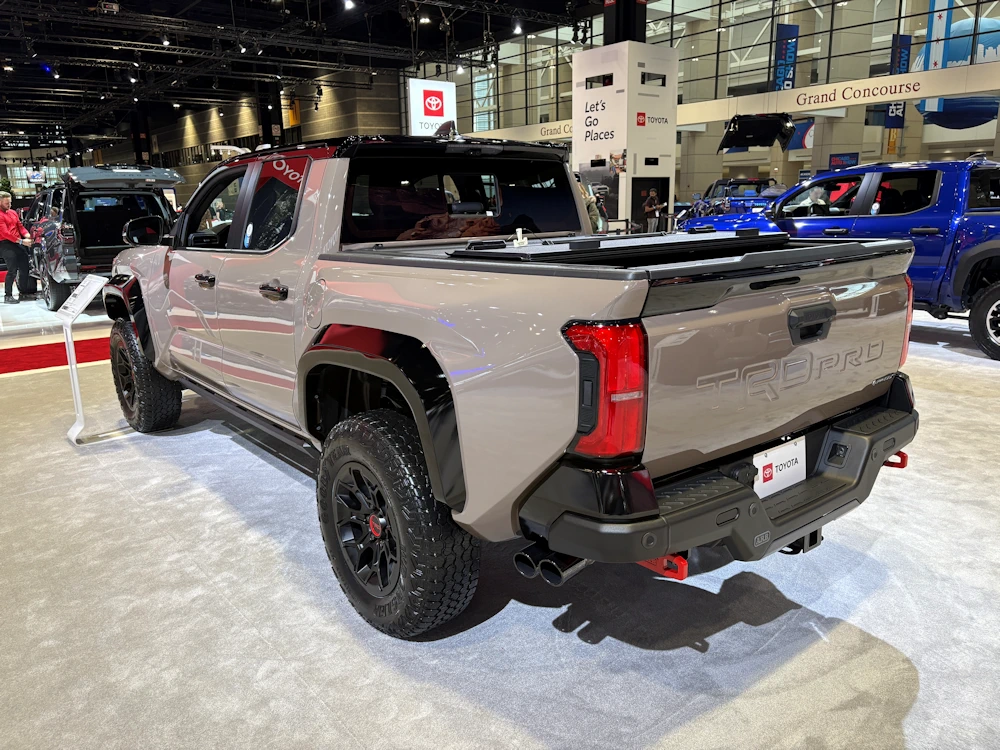
Trailhunter’s identity is unusually specific about the kind of hardware it bundles. Toyota describes Trailhunter as developed with ARB, Old Man Emu, and RIGID Industries, with standard elements that lean toward expedition readiness, including Old Man Emu suspension, steel skid plates, a high-mount air intake, and an onboard air compressor. Toyota also calls out model-specific equipment such as an ARB roof rack on 4Runner Trailhunter and an ARB steel rear bumper and sport bar on Tacoma Trailhunter, alongside 33-inch tires on bronze-finished wheels. That is the overlanding pitch in one sentence: foundational protection, integrated mounting solutions, and trail lighting already matched to the vehicle. (Toyota)
TRD Pro takes a different approach to “factory complete,” leaning more on performance-oriented off-road tuning and a signature visual identity. One of the best examples is how Toyota uses TRD Pro–exclusive colors as a branding device, with 2026’s Wave Maker offered specifically on TRD Pro versions of 4Runner, Tacoma, Tundra, and Sequoia. That kind of one-year color strategy has become part of TRD Pro culture, creating an immediate visual cue that a vehicle is the top off-road trim rather than simply an appearance package. (Toyota)
On Tacoma, the contrast between the two trims is especially clear because both sit near the top of the same lineup but communicate different “use cases.” Toyota frames Tacoma Trailhunter as purpose-built for overlanding and highlights gear such as Old Man Emu shocks, an ARB steel rear bumper with recovery points, and an ARB modular sport bar with removable MOLLE panels, reinforcing the idea that storage, mounting, and recovery are part of the trim’s core value. TRD Pro, in comparison, is typically the Tacoma that signals the most aggressive off-road stance and tuning, appealing to buyers who want a factory-built performance truck that feels special even before any accessories are added.
The 4Runner lineup shows a similar split. Toyota positions 4Runner Trailhunter as a dedicated overlanding grade with integrated equipment that supports long-haul self-reliant travel, while TRD Pro remains the “statement” off-road grade that leans into peak factory capability and visual identity. In practice, Trailhunter is often the trim that looks like it is already halfway to an overland build—rack, intake, lighting, compressor—while TRD Pro looks like the factory’s most athletic version of the truck, ready for trail days, fast dirt, and a more performance-forward off-road style.
TRD Pro’s bigger footprint across Toyota’s body-on-frame family also changes how it is perceived. Tundra TRD Pro and Sequoia TRD Pro extend the trim’s identity into full-size territory, where the buyer may want flagship off-road credibility without giving up towing confidence, road-trip comfort, or three-row practicality. This broader presence reinforces TRD Pro as Toyota’s cross-platform “top badge” for off-road trims, while Trailhunter remains a targeted, overlanding-specific program applied only where Toyota wants that story to be tightly controlled. (Toyota)
The buying decision often comes down to what “ready” means. Trailhunter is ready in an equipment sense, bundling integrated accessories and foundational upgrades that overland builds commonly start with, and doing it in a way that aims to preserve OEM fit, finish, and warranty logic. TRD Pro is ready in a performance and identity sense, designed to feel like the most assertive, most capable factory off-road trim across more vehicles, with its own color strategy and a long-running reputation. The practical takeaway is that TRD Pro is the broader flag planted across Toyota’s off-road lineup, while Trailhunter is the more specialized tool built to serve a specific kind of adventure.
Autosplainer is for informational purposes only. Best attempts are made to ensure reliability and timeliness of information. Autosplainer does not sell vehicles or offer products or services of any kind for sale.