
Mobility Vans: What You Need To Know
61 million adults in America have some form of disability, which is roughly one in four. Fortunately, there are now numerous disabled transportation options, including handicap accessible vehicles. There are different kinds of conversions for vehicles you may be familiar with, like the Toyota Sienna, the Chrysler Pacifica, and even the Chevrolet Silverado. Let's take a look at all the mobility van options and ways consumers can find themselves behind the wheel of these accessibility-enabling vehicles.
Handicap accessible vehicles are remanufactured to offer easy access for wheelchairs and scooters. Floors are lowered and ramps are retrofitted for ease of ingress and egress. Some vehicles have kneeling systems to adapt suspension levels, making the ramp less steep to ascend and descend when it is rolled out. Seats may be removable, so that a wheelchair or scooter user may be able to position itself in either the driver or passenger seat.
Handicap accessible vehicles have two primary configurations. Logically-named side-entry is what you would think it is, using existing the side door of a minivan (or retrofitting a vehicle like a Chevrolet Traverse SUV which does not have a sliding door). These vehicles may be more expensive, but are easy to use and make pickup and dropoff to curbs simple, and make it easier for the disable person to access the driver’s seat. If the vehicle is set up for the disabled person to be the driver, it may or may not have modifications to make driving the vehicle easier via hands depending on the nature of someone’s lower body disability.
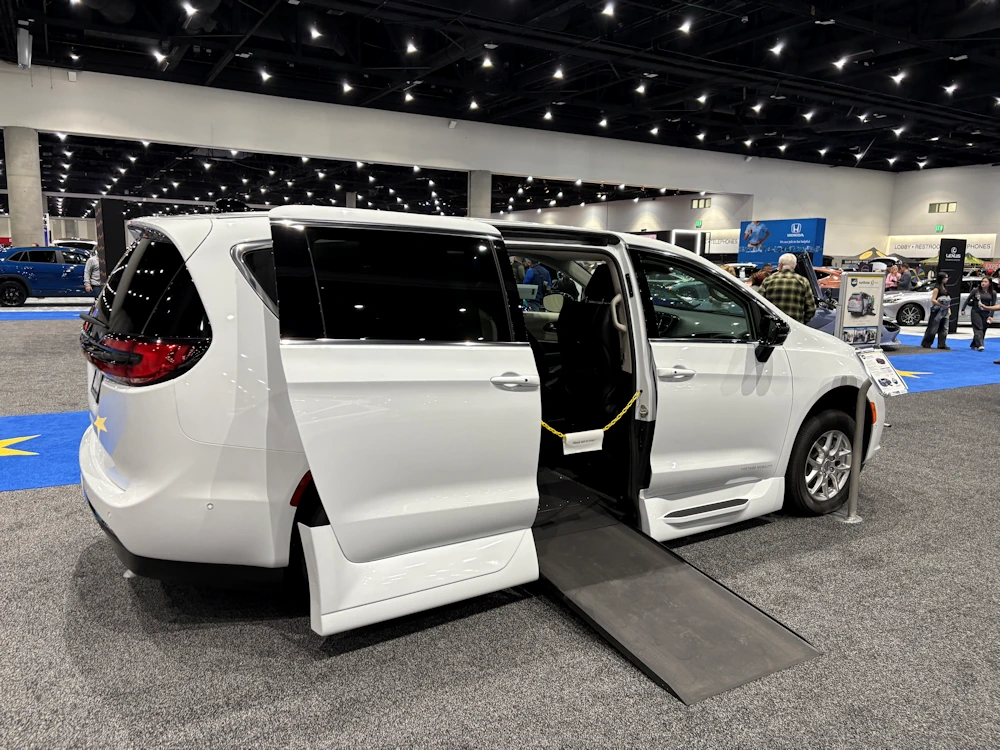
The other primary configuration for a mobility vehicle is rear-entry. Rear entry vehicles have foldout ramps that make their way to the ground. Rear entry mobility vehicles may be more affordable, requiring less remanufacturing of the vehicle. It is a better option if the handicapped person is being chauffeured and does not need to access the front seats.
Popular mobility vans include the Chrysler Voyager, which is available under $65k from both Mobilityworks and Braunability. Options such as the Toyota Sienna are more expensive, with Braunability advertising $83,940 msrp, with similar pricing for the Honda Odyssey. Other popular options include the Chevrolet Traverse, as well as pre-owned vans, which can reduce the cost substantially vs. a newly re-manufactured mobility van.
Right now some popular vendors for mobility vehicles have some very attractive promotions, enabling potential mobility van owners to save. These include 2.49% APR from BraunAbility for up to 72 months, one of the leading retro-fitters of mobility vehicles, on Chrysler Pacifica rear-entry models (see their dealer locator here for pricing near you). They also advertise the ability to purchase from rates as low as $599/monthly. Competitor MobilityWorks has a $500 deposit promotion per their website, as well as pre-owned inventory available under $40,000 (see their dealer locator here for pricing near you). With over 90 locations, MobilityWorks covers most of the United States. If you want a mobility access truck, you can even find Chevrolet Silverados retrofitted with side-access doors.
Autosplainer is for informational purposes only. Best attempts are made to ensure reliability and timeliness of information. Autosplainer does not sell vehicles or offer products or services of any kind for sale.