
"Ice Cap" Brings The New Toyota Trailhunter Models Into Focus
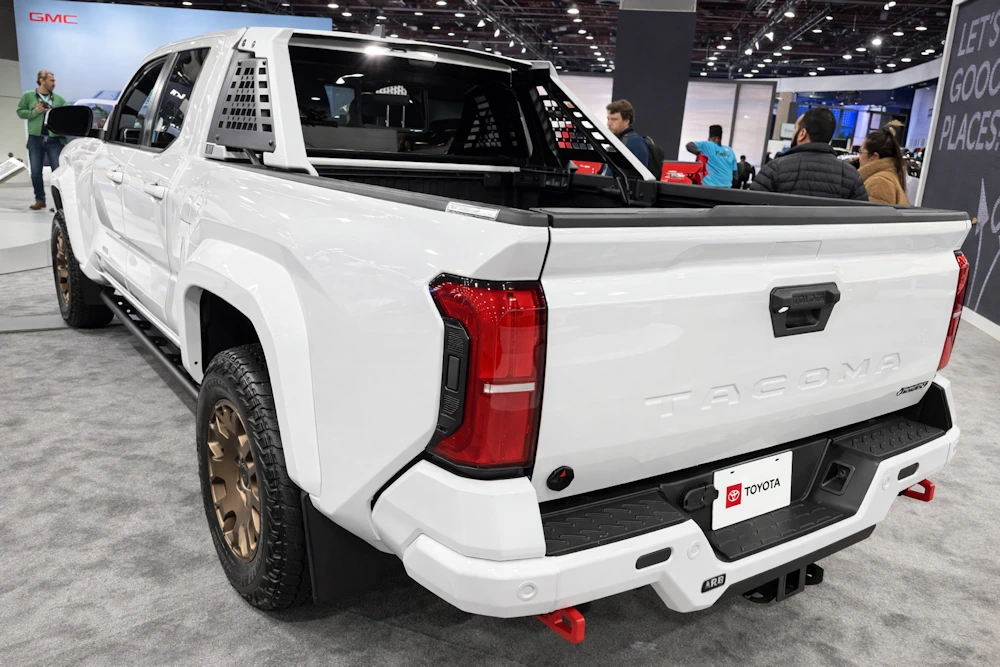
Ice Cap is the kind of white that reads clean and confident rather than sterile, and a strong match for Toyota’s newest factory-overland identity. On these "Trailhunter" models, the bright paint does more than look crisp in photos; its functional hardware that makes the truck look purpose-built. The color’s simplicity ends up amplifying the details that Trailhunter was created to highlight.
Trailhunter is Toyota’s newer “ready-made overlanding” direction, built around the idea that the foundational upgrades—suspension, protection, recovery-minded equipment, and integrated lighting—should be engineered as a cohesive package rather than pieced together one accessory at a time. Toyota introduced Trailhunter on the all-new Tacoma and then expanded it to the all-new 4Runner, emphasizing collaboration with ARB, Old Man Emu, and RIGID Industries to bring credible off-road parts into a factory-backed build. (Toyota)
On the road, Ice Cap carries a “freshly detailed” look that tends to flatter big body-on-frame proportions, but its real advantage shows up in the environments Trailhunter is meant to live in. White hides trail dust better than darker colors, stays visually cooler-looking under harsh sun, and keeps the vehicle’s shape legible against busy backgrounds like trees, rocks, or desert scrub. In practical terms, Ice Cap offers a calm base that still looks aggressive once the Trailhunter’s off-road equipment comes into view.
The 4Runner Trailhunter, in particular, uses Ice Cap as a canvas for a very specific aesthetic: overlanding hardware that appears integrated, not tacked on. Toyota describes Trailhunter as i-FORCE MAX–only and equips it with purpose-built components such as Old Man Emu shocks, a low-profile high-mount air intake, 33-inch tires on 18-inch bronze-finished wheels, an onboard air compressor, RIGID Industries color-selectable fog lamps, an ARB roof rack, and a heritage-style bronze “TOYOTA” grille with an integrated LED light bar. In Ice Cap, those elements tend to pop with high contrast, making the Trailhunter’s mission readable from across a parking lot. (Toyota)
The 4Runner’s broader color palette helps explain why Ice Cap works so well here. It sits among a mix of darker and more saturated options, plus the TRD Pro’s one-year hero color, which means Ice Cap can function as the “clean classic” choice that still looks special once paired with Trailhunter’s bronze and black accents. Toyota also positions Trailhunter alongside the TRD Pro and higher trims as part of a lineup that keeps the 4Runner’s rugged identity front and center, so the paint choice becomes a style decision rather than a compromise between “interesting” and “serious.”
Tacoma Trailhunter takes the same philosophy and applies it to a midsize pickup footprint that many overlanders prefer for maneuverability, garage friendliness, and trail practicality. Toyota frames Tacoma Trailhunter as i-FORCE MAX–exclusive and leans into the same integrated-equipment idea, centering the grade around overlanding-ready suspension and protection, trail-focused lighting, and signature design cues that clearly separate it from standard TRD grades. When finished in Ice Cap, the Tacoma’s lines look sharp and modern, and the color makes the bed, cab, and protective details read as one cohesive shape rather than a collection of panels and add-ons.
Toyota’s 2026 Tacoma overview reinforces Ice Cap’s place in the lineup while spotlighting how Trailhunter fits into the model’s off-road structure. The company describes Trailhunter as a serious off-road grade and also lists Ice Cap among the Tacoma’s color lineup, placing it alongside darker neutrals and more expressive choices while keeping Trailhunter’s visual identity anchored by bronze elements and integrated lighting. That combination is part of why Ice Cap Trailhunter builds tend to look “premium rugged” rather than merely utilitarian. (Toyota)
As for Trailhunter models beyond the 4Runner and Tacoma, Toyota’s own positioning consistently treats Trailhunter as a two-vehicle lineup—two off-road legends built around the same factory-overland idea. That matters for shoppers who want a clear answer to “which vehicles actually get Trailhunter,” because it suggests the grade is being rolled out deliberately rather than scattered across multiple nameplates all at once. If additional Trailhunter models arrive later, they will likely be announced as expansions of this same concept, but for now the identity is tightly focused. (Toyota)
Ice Cap also fits Trailhunter from a long-term ownership perspective. White tends to be easier to live with aesthetically across years of wear, and it pairs naturally with accessories that many Trailhunter owners add over time—roof boxes, awnings, bed racks, recovery gear, and matte-black hardware. The color can make these upgrades look intentional rather than visually noisy, which is useful for a build style where capability additions often accumulate over time.
In the end, Ice Cap Trailhunter models succeed because the paint color reinforces what Trailhunter is trying to deliver: a factory-engineered overlanding platform that looks integrated, trustworthy, and ready for real use. In both the 4Runner and Tacoma, Ice Cap gives the design a bright, clean foundation while letting the bronze wheels, lighting, racks, and protection pieces do the talking. That balance—classic color, modern hardware, and a clear mission—helps Trailhunter stand out in a way that feels adventurous without feeling gimmicky.
Autosplainer is for informational purposes only. Best attempts are made to ensure reliability and timeliness of information. Autosplainer does not sell vehicles or offer products or services of any kind for sale.