
How To Save On The Toyota Corolla Cross
First introduced in 1966, the Corolla is one of Toyota's longest running models, and one of the best selling cars in the World. The Toyota Corolla Cross translates the Corolla’s easygoing personality into a small SUV that feels immediately familiar. Right now, Toyota has a number of great incentives on the Corolla Cross as the year wraps up.
Upright seating for great sightlines, a calm ride at highway speed, and a cargo area shaped for errands or a weekend away. The footprint stays city-friendly, yet the cabin is airy and simple to use, with clearly labeled controls and a layout that keeps attention on the road. Available all-wheel drive adds foul-weather confidence, and the overall tuning is about effortlessness—quiet, composed progress without asking the driver to rethink daily routines. (Corolla Cross)
Performance in the gas model centers on a 2.0-liter engine paired with a continuously variable transmission, tuned to deliver smooth launches and low-stress commuting. The steering is light in town, stability is reassuring on the interstate, and the chassis filters rough pavement well for this class. For drivers who split time between school runs, downtown parking, and long-weekend miles, the balance is exactly what you want from a compact crossover: responsive enough when merging, relaxed enough when the road stretches out.
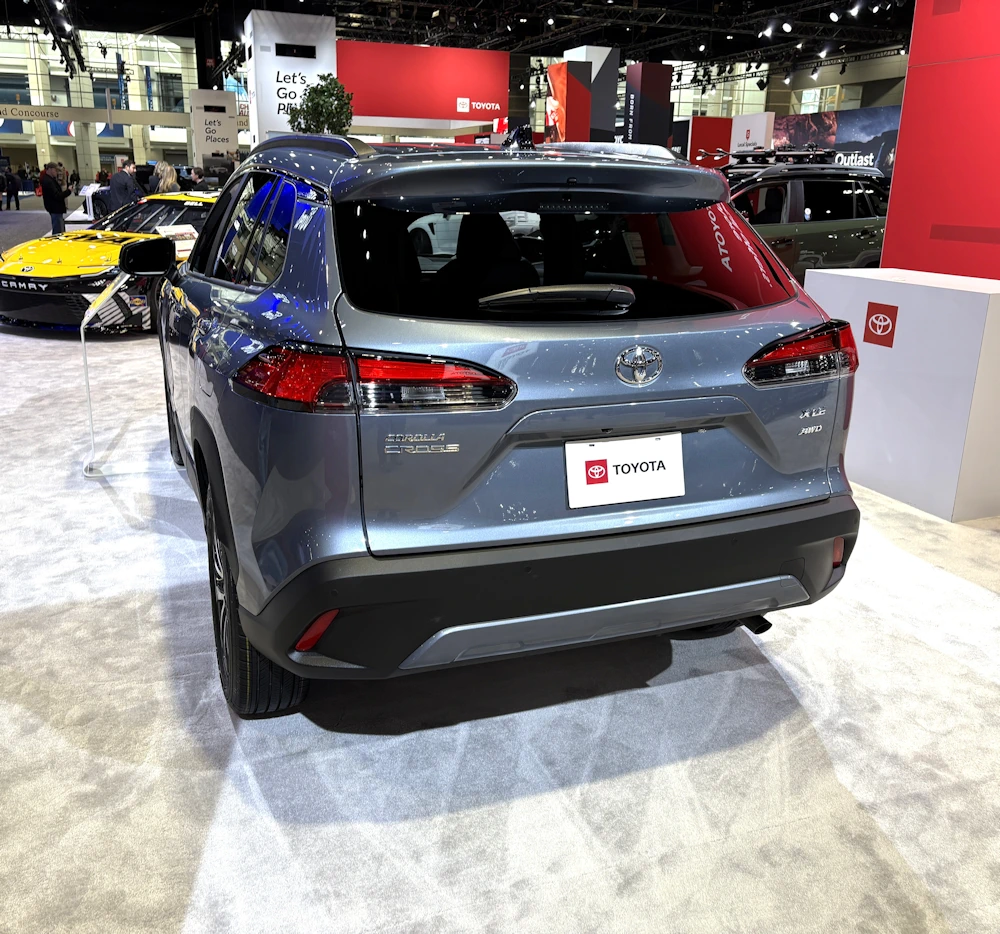
Corolla Cross Hybrid builds on the same template with a livelier, more efficient powertrain. Toyota quotes 196 net combined horsepower and up to an EPA-estimated 42 mpg, so it feels eager off the line while trimming fuel stops across the week. Electronic On-Demand All-Wheel Drive is available, bringing confident traction when rain, snow, or a gravel access road enters the plan—all without changing how you load people or cargo. The result is the fuller expression of this platform: the same easy manners with more punch and range. (Cross Hybrid)
The gas lineup offers trims such as L, LE, and XLE that stack meaningful equipment as you step up—comfort features, bigger wheels, and additional convenience—while the hybrid family leans sportier with S, SE, and XSE (plus a Nightshade look on select grades), pairing the efficiency gains with a more extroverted stance. Either way, the personalities are clear: practical and refined on the gas side, a touch more athletic in the hybrid.
Inside, the emphasis is on simple, honest usability. The driver sits high with a clean view over a low dash, the rear bench comfortably seats adults, and the split-fold second row lets you flip from friends to bulky cargo without a puzzle. The cargo bay’s square opening and low liftover help with strollers, luggage, or a week’s groceries, and available features like a power liftgate and roof rails make everyday errands and road-trip packing easier. It’s the kind of cabin you learn in an afternoon and appreciate for years.
The tech story is modern without being fussy. Toyota Audio Multimedia brings a crisp touchscreen interface with wireless Apple CarPlay and Android Auto, voice-activated navigation and functions on compatible subscriptions, and available Wi-Fi connectivity so passengers can stream on the go. Steering-wheel controls and clear on-screen tiles keep interactions quick, minimizing taps and distractions while still giving you the conveniences you expect in a new SUV.
Safety is treated as standard equipment rather than an upsell. Toyota Safety Sense 3.0 includes Pre-Collision System with Pedestrian Detection, Lane Departure Alert with Steering Assist, Lane Tracing Assist, Road Sign Assist, Proactive Driving Assist, and Full-Speed Range Dynamic Radar Cruise Control. In practice, that means fewer tiring micro-decisions on long drives and an extra margin when traffic gets unpredictable—technology that fades into the background until you need it.
Hybrid models add a layer of composure that frequent commuters will notice. The electric assist smooths stop-and-go traffic, helps the SUV glide away from lights, and settles the drivetrain at cruising speed, underscoring how quietly the platform can cover distance. With available Electronic On-Demand AWD, the hybrid also becomes a confident four-season partner for mountain weekends or stormy school runs, yet it preserves the same straightforward cargo flexibility and easy parking footprint.
For shoppers deciding between gas and hybrid, the calculus is refreshingly clear. Choose the gas model if simplicity and the lowest entry price matter most; pick the hybrid if you value stronger low-speed response and fewer fuel stops, with the option to add AWD either way. Both versions deliver the core Corolla Cross experience—tidy size, calm ride, intuitive tech, and family-friendly cargo—so the decision becomes about how you drive, not what you have to give up.
Right now Toyota has a host of incentives on the 2026 Corolla Cross as the year wraps up. 2026 Corolla Cross leases from $319 a month for 36 months with $2,999 down; Hybrid SE leases for $349 a month with the same down. Lastly Toyota offers $500 military discount and $500 recent college grad discount. Be sure to check with local dealers for best promotions in your area as they can vary by region. Cast a wide net using the dealer inventory tool and compare multiple stores within a reasonable driving radius; despite national promotions, not all dealers price the same, and some will be more aggressive on in-stock colors or option packages. Ask every store for an out-the-door price that includes taxes and fees, and be selective about add-ons like paint protection, VIN etching, maintenance packages, and extra alarm systems—polite declines on extras can save hundreds or even thousands.
Autosplainer is for informational purposes only. Best attempts are made to ensure reliability and timeliness of information. Autosplainer does not sell vehicles or offer products or services of any kind for sale.