
Chevy’s Latest Silverado 3500HD "Dually" Is A Beast
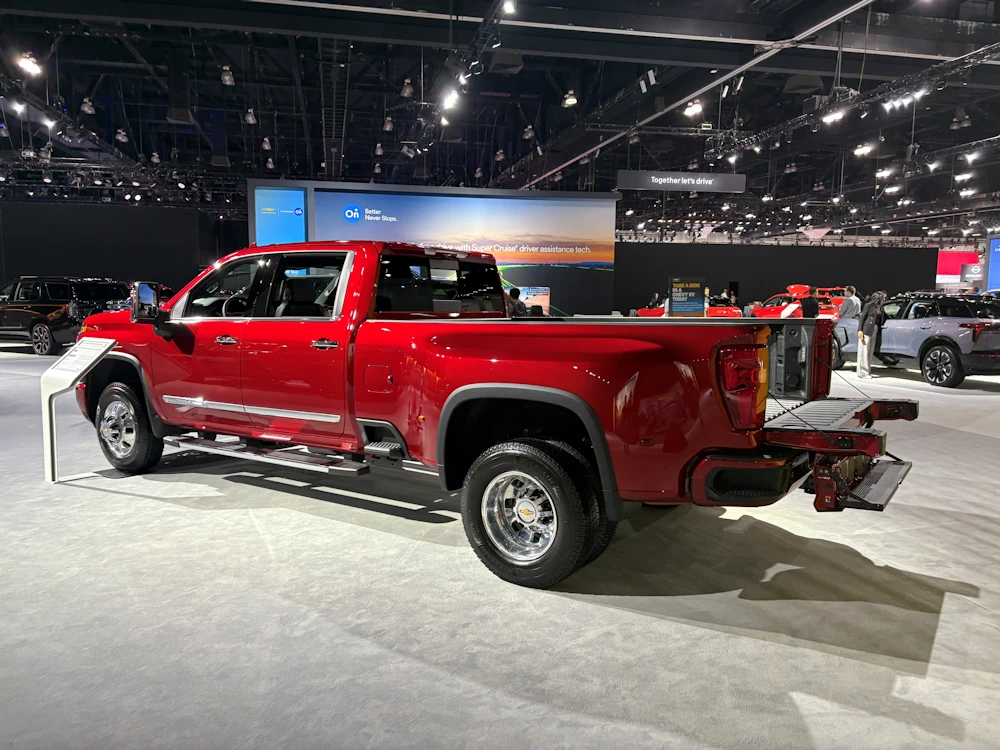
A Silverado 3500HD dually is built for jobs that make ordinary pickups blush, pairing a heavy-duty chassis with dual rear wheels that signal serious hauling intent. The stance is wide, the bed sits like a platform, and the whole truck reads as an implement. In the heavy-tow world, the dually configuration is about both style and more about control, stability, and long-term durability.
Dual rear wheels change the character of a truck in the most practical way: they widen the rear contact patch and give the chassis more support when a trailer’s tongue or pin weight loads the back axle. The benefit shows up in steadier tracking at highway speeds, less side-to-side motion when crosswinds push against a tall trailer, and a more planted feel when the road surface is imperfect. For owners pulling large fifth-wheels, goosenecks, or equipment trailers, that extra rear footprint is the difference between simply having enough capacity and actually feeling composed while using it.
The Silverado 3500HD dually also tends to deliver a calmer experience under load because the rear suspension and tire arrangement are working with the driver rather than constantly reacting to weight shifts. With heavy trailers, small inputs at the steering wheel can feel amplified in lighter trucks, but a dually’s wider rear stance helps keep the truck’s body movement more measured. That composure matters on long grades, during lane changes, and in the moments that define heavy towing, like merging into fast traffic or descending with a trailer pushing from behind.
Under the hood, the 3500HD lineup is built around powertrains intended to make sustained work feel routine, not heroic. Gas and diesel options exist to match different priorities, from simpler running costs and predictable maintenance to the low-end torque and relaxed pulling feel that diesel buyers expect. The point is not just peak output, but how confidently the truck can hold speed under load, manage heat, and deliver consistent performance across long workdays. (chevrolet.com)
A dually’s bed and hitch setup is where the Silverado 3500HD starts to look like a dedicated tool rather than a large commuter vehicle. Many owners choose configurations oriented around trailering hardware, cargo management, and the kind of bed accessibility that matters when straps, chains, and tools become daily necessities. When a truck is expected to tow one day and carry pallets or gear the next, a straightforward, durable bed layout becomes part of the vehicle’s real value, especially when paired with a wide rear stance that keeps everything stable when weight is loaded high or uneven.
Trailering confidence is also shaped by visibility and feedback, and a modern heavy-duty dually is designed around making the driver feel informed rather than isolated. The right mirrors, camera support, and trailer-assist features can turn an intimidating trailer into something that feels manageable in tight spaces and predictable at speed. A 3500HD dually is often chosen precisely because it is expected to operate in situations that leave little room for error, such as backing into crowded storage areas, threading through fuel stations, or maneuvering on narrow access roads.
Cab choice matters more than it first appears, because the Silverado 3500HD dually often lives a split life between hard work and long-distance travel. Crew cabs make sense for families and crews, while other cab setups can prioritize bed length and turning radius depending on the job. In a truck that may spend hours on the road with a trailer behind it, comfort details like seat support, storage, and an intuitive control layout become practical necessities, not luxuries.
The dually configuration also carries an ownership logic that goes beyond raw capability. Heavy towing and hauling accelerate wear on tires, brakes, and driveline components, and a truck designed to do that work with more margin can feel less stressed over time. A dually’s stability can reduce the constant micro-corrections and load-induced sway that fatigue drivers on long trips, which is part of why experienced towers often view dual rear wheels as a quality-of-life upgrade as much as a capacity decision.
There is a tradeoff, and it is worth acknowledging because it is part of what makes the dually the right truck for the right owner. The wide rear fenders and extra tires take up space, tighten some parking scenarios, and make the truck feel physically larger in everyday errands. For buyers who tow big often enough to justify it, those compromises fade quickly, because the stability and confidence under load become the everyday experience that matters most.
A Silverado 3500HD dually ultimately succeeds when it is treated as purpose-built equipment: specified for the trailer type, the payload reality, and the distances involved. It is a truck for people who want the towing day to feel ordinary, the crosswind to feel less dramatic, and the long grade to feel controlled rather than tense. In that role, dual rear wheels are not a statement at all, but a practical decision that makes heavy work feel more predictable, safer, and more comfortable over the long haul.
Autosplainer is for informational purposes only. Best attempts are made to ensure reliability and timeliness of information. Autosplainer does not sell vehicles or offer products or services of any kind for sale.